How Restaurants Get More Google Reviews (Without Annoying the Table)
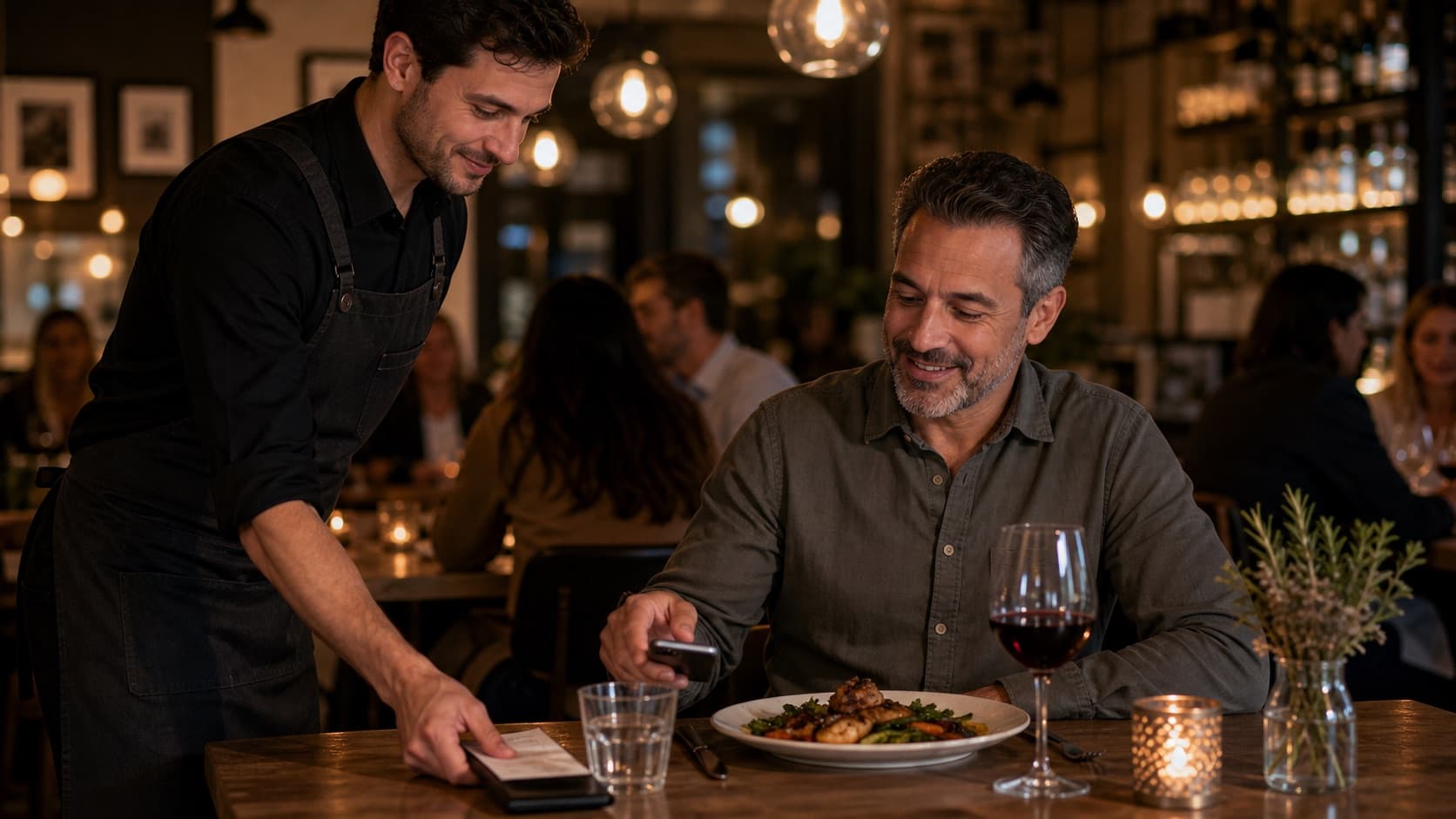
Almost every restaurant owner I talk to says the same thing. "I've got 240 covers on a Saturday, the dining room is humming, food's going out hot, the back patio is a wait list. Then Monday morning Google says we got two reviews all weekend. Two." Then the part that actually matters: "I'm not going to make my servers ask. They're already running six tables. The last thing I need is them squeezing in a Google ask between dropping the check and clearing four-tops." Honestly, that's the whole problem. The dining room is full, the customers are happy, and the ask never happens because nobody has a clean place to put it.
Below is the playbook I've watched full-service restaurants and takeout-heavy operators use to go from a slow trickle to a steady three or four reviews a day, without any server ever performing the ask out loud and without slowing a single table turn. Restaurants are a weird vertical to work in. The table-turn pressure, the bill-fold moment, the fact that everyone has a phone in their hand right after the meal, the takeout channel sitting on the side. The system below is built around how a restaurant actually runs on a Friday night.
Why Restaurant Reviews Are Stuck in 2015
Restaurants should be eating Google Maps. The product is high-frequency, the affection runs deep, and the emotional state at the end of a great meal (full, slightly buzzed, in a good mood with whoever you came with) is basically purpose-built for leaving a review. And yet the typical independent full-service restaurant has fewer Google reviews than the auto-parts store down the block.
It's not a service quality problem. The restaurant industry has spent fifteen years optimizing for OpenTable, Yelp, and Resy and never quite caught up to the fact that Google Maps now drives more covers than all three combined for most independents. The review systems most restaurants still run were designed in 2015. A printed receipt with a QR nobody scans. A comment card nobody fills out. An email blast that lands in promotions. Meanwhile the customer who just had a great steak is sitting at the table with their phone in their hand, waiting for the check, and no system is putting a Google review prompt in front of them at that exact moment.
The other place owners get it wrong is thinking the ask is the server's job. It can't be. A server with six tables on a Saturday rush doesn't have the bandwidth to remember which tables had a good experience and layer a review ask on top of everything else. The system has to do the asking. The server's job is to make the experience worth a review.
The Bill-Fold Moment
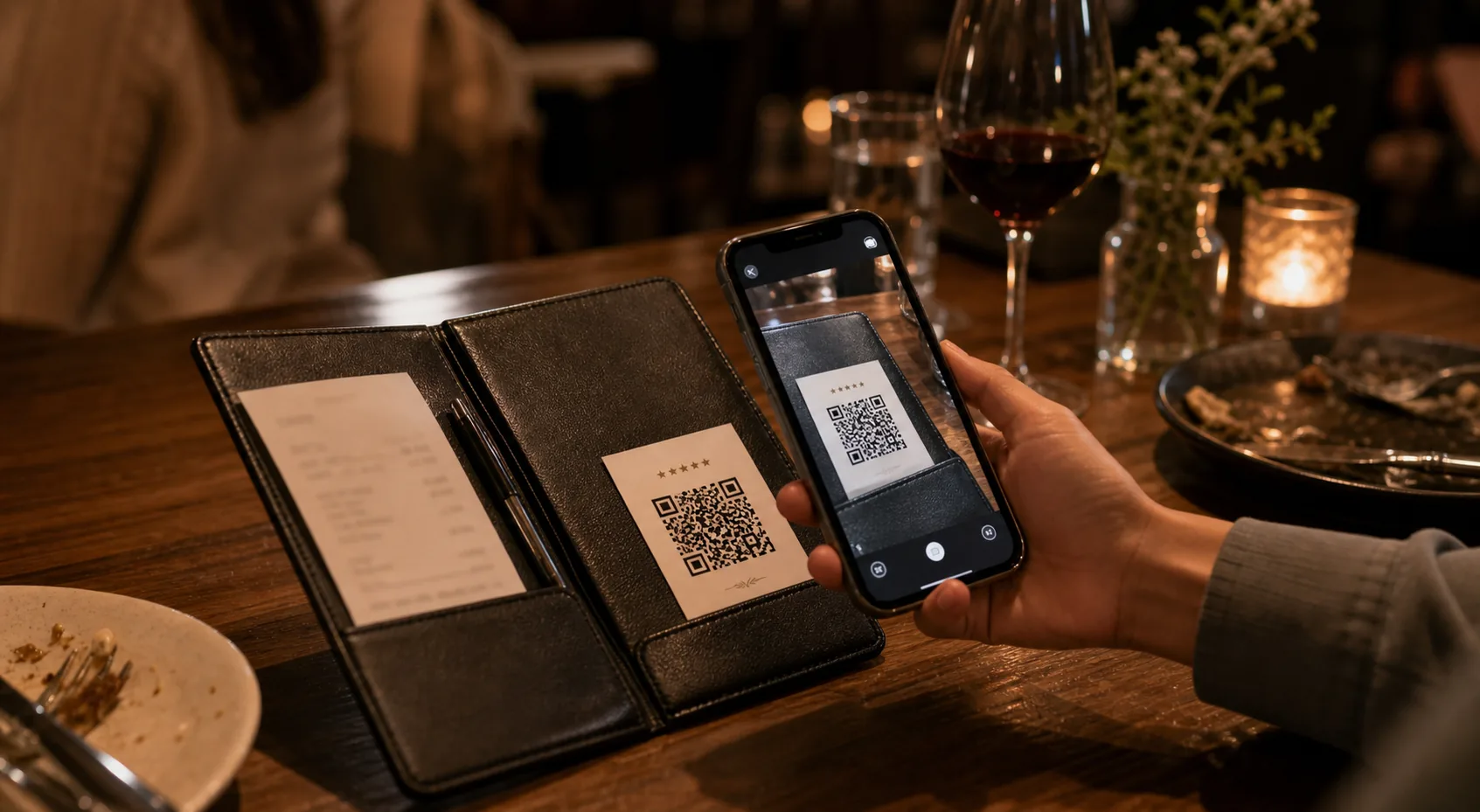
There's one moment in every full-service restaurant where the customer is at the table, their phone is out, the meal is over, and they're not annoyed by being asked to do something brief. It's when the bill comes. The bill-fold moment is the highest-leverage review placement in full-service, and almost nobody uses it well.
The server drops the check in a bill-fold. The table is winding down. Phones come out: splitting on Venmo, texting the babysitter, taking a picture of the dessert. The customer opens the bill-fold, sees the check, and there's a 90-second window where they look at exactly one thing, decide on a tip, and close it. If there's a clean, prominent QR in that bill-fold ("had a great time? a quick Google review means a lot"), going directly to the leave-a-review screen of your Google profile (not your homepage, not a survey, not a Linktree), a meaningful percentage of customers will scan it. In my experience that's somewhere between 8% and 14% across full-service restaurants. On a Friday with 300 covers, that's real volume.
The mistakes are pretty predictable. The QR is too small. It's on the back of the receipt instead of the inside of the fold. It links to the homepage. It's surrounded by three other QR codes (Instagram, OpenTable, gift cards) so the customer can't tell which is which. Or it's a printed QR that's four months old, generated by a service no longer paying for the redirect, so it now goes to a 404. I've seen that one more than once.
The fix is a single, well-placed QR. Inside the bill-fold, on a clean card, going directly to the Google review URL for your specific location. One QR, one purpose, no friction. A longer breakdown of why this placement out-performs almost everything else for sit-down is in our pillar piece on getting more Google reviews.
POS-Triggered Texts: The Future, If Your Stack Allows It
A tier above the bill-fold QR is a POS-triggered SMS at check-close. When the server closes the check in Toast, Square for Restaurants, or Lightspeed, the customer's phone number (if it's on file) triggers a short SMS thirty minutes later: "thanks for dining with us tonight, if you have a sec a quick Google review would mean a lot."
The catch is that most restaurant POS systems don't reliably capture customer phone numbers. Reservations through OpenTable or Resy do. Takeout orders do. But a walk-in deuce at the bar? Probably not. So the POS-triggered SMS works for some seats and not others. For reservation-tied tables it runs at 20-30% conversion. For walk-ins it can't run at all.
The way I've seen operators bridge this gap is a soft phone-capture at check drop. The bill-fold QR opens a tap-to-text, the customer's phone opens a pre-filled SMS to your business number, they hit send, and they're opted in for the follow-up. The same mechanic works for coffee shops at the counter, which is covered in our coffee shop guide. One important caveat: the customer has to opt in every time for the SMS to be TCPA-compliant. The tap-to-text is the opt-in. Don't extract numbers from your POS and start texting them on the assumption that being a past customer counts as consent. It doesn't.
Reservation Diners vs Walk-Ins
These two groups want different things, and most restaurants run one program for both.
Reservation diners come in with intent. They picked your restaurant days or weeks in advance, often as the centerpiece of an evening like a birthday, anniversary, or date night. The stakes are higher, so the review-leaving rate is higher. You also already have their phone number through the reservation platform. The post-reservation email through OpenTable or Resy is the lowest-effort review request in the playbook and converts at 2-4%. Not great, but free, and worth turning on.
The better play for reservation diners is the same-night SMS, thirty to sixty minutes after check-close. The customer is in an Uber home or having a nightcap, and a text at that window converts at 15-20% in my experience. Email is for the next-day hello. SMS is for the actual ask, and the warm window closes faster than most operators think.
Walk-ins are harder. No contact info, no reservation, no opportunity for follow-up. The entire walk-in program lives or dies on the bill-fold QR, because that's the only piece of paper that reaches every walk-in table. Make it good and walk-ins produce a steady stream of in-the-moment reviews. Don't, and walk-ins produce nothing.
Takeout and Delivery: The Channel Most Operators Forget
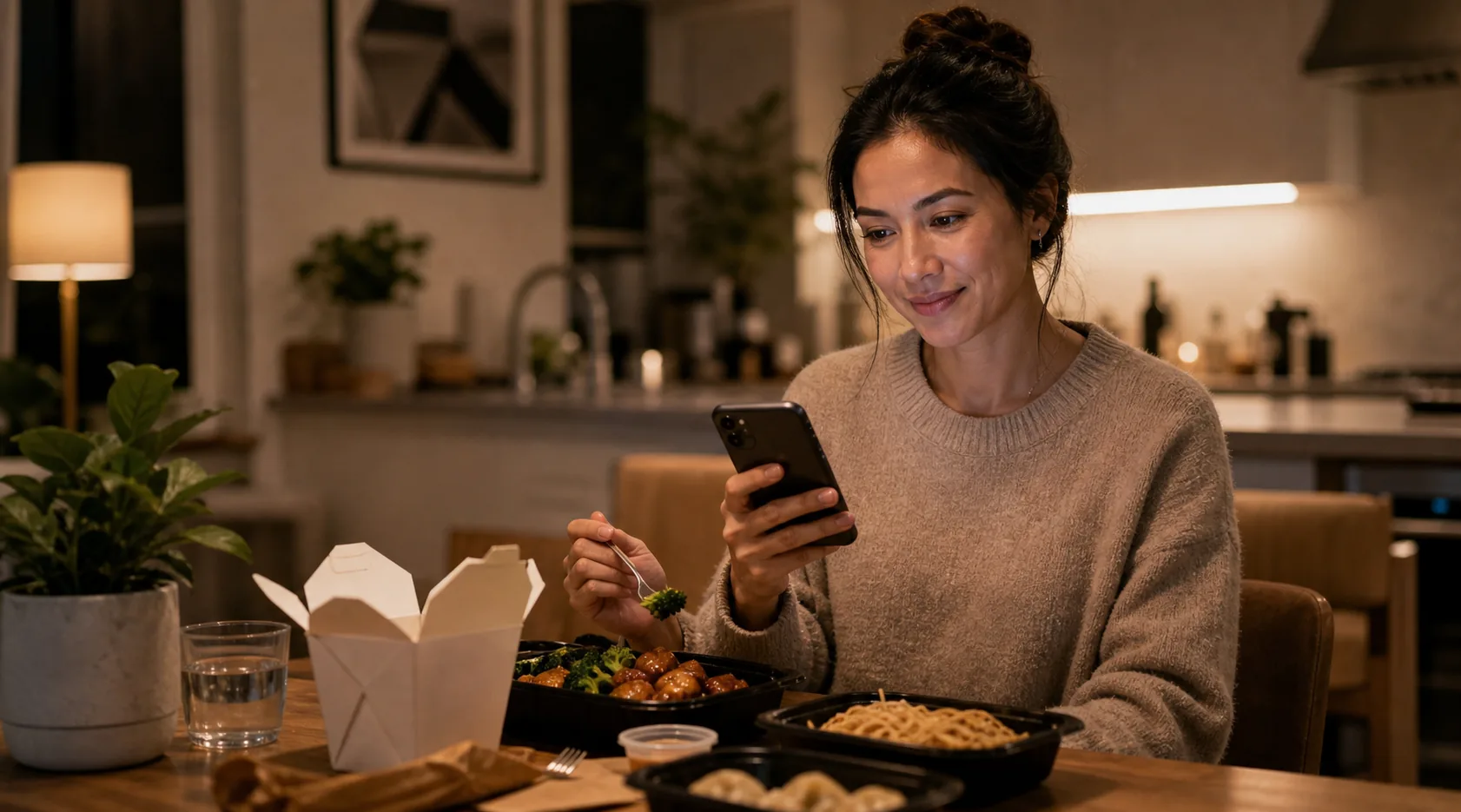
Here's the part most operators don't think of as a review opportunity, which is exactly why it's the biggest one. Takeout and delivery customers ordering directly through your phone or website (not Uber Eats or DoorDash) hand over their phone number as a condition of placing the order. You already have it. You have an unambiguous reason to text them ("your order is ready"). And the post-pickup window is the warmest moment you'll ever have with a takeout customer.
Send the review SMS thirty to sixty minutes after pickup, not at order-ready. That order-ready text is transactional, and bolting an ask onto it crosses a wire. By thirty minutes the customer is home, the food is on the table, the containers are open. "Hope the pickup was easy and the burrito traveled well, if you have a sec a quick Google review means a lot" lands while they're literally eating your food. I've seen takeout-heavy operations pull more reviews from pickup customers than from their entire dine-in book, just because the number is reliably captured and the timing is unambiguous.
The same applies to direct delivery (ordered through your website). Send thirty minutes after the driver marks the order complete. Don't send anything to Uber Eats or DoorDash customers. You don't have their number, can't get it, and that channel is a black box.
The takeout play is also the lowest-friction first program for a restaurant that's never run anything systematic. You already have the numbers. The POS knows when the order was picked up. Wiring up a thirty-minute-post-pickup SMS is the simplest thing in the playbook, and for many operators it doubles monthly review count inside a single billing cycle. The mechanics are in our review-request automation guide.
The Server Training Wedge (Hint: Less, Not More)
Every restaurant owner who hears about a review program eventually asks the same thing: "should I train the servers to mention it?" The intuitive answer is yes. The right answer is mostly no. The nuanced answer is yes, but in a very specific way that requires less from them than you'd think.
The wrong version is training servers to verbally ask for a Google review at the end of every meal. It doesn't work, for the same reason it doesn't work in salons. The moment is too dense, the ask reads as transactional, and the staff burn out by the third week. Servers told to ask every table will ask the first ten and then quietly stop.
The right version is one specific line at one specific moment. When they drop the check, they say "by the way, there's a QR in the bill-fold if you ever feel like leaving us a Google note, no pressure." That's it. They don't read the table's mood, don't remember which tables to ask. Same line every time, at the bill drop. Most won't scan. Some will, and the ones who do convert at much higher rates than unprompted scans, because the mention pre-warmed the placement.
The pitch to servers is the inversion of what they expect. You're not adding work, you're taking it away. They don't have to perform the ask, read the room, or remember anything. The bill-fold does the work, they just nudge it.
Brunch Rush, Slow Tuesday: The Cadence Effect
Most operators miss this. Google's algorithm cares about review recency, not just count. A restaurant with 80 reviews three years ago and 4 in the last month ranks worse than a restaurant with 50 lifetime and 12 in the last month. The rhythm matters as much as the total.
In practice that means your slow nights matter more than your busy ones. On a Saturday with 320 covers, even a mediocre program produces reviews. On a slow Tuesday with 40 covers, no reviews come in unless the system is running. Those slow-Tuesday reviews are what keeps your recency signal alive between busy weekends. The temptation is to turn programs on for the rush and forget midweek. Don't. The midweek reviews are quietly doing the most work for your local ranking.
Weekend brunch is, for a lot of restaurants, the single best review-conversion service of the week. The customer base skews younger and more phone-native, more inclined to photograph the eggs benedict. Brunch tables turn faster than dinner tables, so the bill-fold QR gets seen more times per square foot per hour. Restaurants running a brunch-specific QR card with slightly different copy, maybe a soft Instagram tag prompt, outperform restaurants using the same bill-fold for every service.
| Service style | Primary placement | Secondary placement | Timing |
|---|---|---|---|
| Full-service dinner | Bill-fold QR | POS-triggered SMS (if number on file) | 30-60 min after check-close |
| Weekend brunch | Bill-fold QR + soft IG tag | Email next morning | At check-close + 24h |
| Takeout / pickup | Post-pickup SMS | None | 30-60 min after pickup |
| Direct delivery | Post-delivery SMS | None | 30 min after order marked complete |
| Bar / walk-in | Bill-fold QR | None | At check-close |
| Reservation-tied | Same-night SMS | OpenTable/Resy email next morning | 30-60 min after check + 24h |
The point isn't that every restaurant needs six flows. It's that "the review program" isn't one thing. It's a different placement for each service type, and most restaurants run zero or one and leave the rest empty. There's a broader piece on getting the Google Business Profile itself set up to receive these reviews well (categories, photos, hours, menu links) in our GBP optimization guide. It's worth reading before you turn the firehose on, because reviews landing on a half-finished profile convert worse.
Frequently Asked Questions
Frequently Asked Questions
- Where should the Google review QR code go in a full-service restaurant?
- Inside the bill-fold, on a single clean card, linking directly to the leave-a-review screen of the Google Business Profile. Not on the receipt, not on the menu, and not next to three other QR codes.
- What conversion rate should a bill-fold QR produce?
- Between 8 and 14 percent of customers will scan a well-designed bill-fold QR. On a Friday with 300 covers that produces 24 to 42 review starts, which is meaningful weekly volume.
- Can a restaurant text past customers using phone numbers from the POS?
- Not without explicit consent. TCPA requires opt-in for marketing texts, and being a past customer does not count. Use a tap-to-text bill-fold mechanic so the customer opts in at the table.
- When should takeout customers receive the review request text?
- Thirty to 60 minutes after pickup, not at order-ready. The order-ready text is transactional; bolting a review ask onto it crosses a wire. The mid-meal text catches the customer eating.
- Should servers verbally ask every table for a Google review?
- No. Train them on one mechanical line at check drop pointing at the bill-fold QR. Verbal asks across every table burn servers out and read as transactional after the first ten.
- Why does Google rank slow-Tuesday reviews higher than Saturday reviews?
- Google's algorithm rewards review recency between busy periods. Twelve reviews spread across the calendar month outrank thirty reviews clustered on weekends because the recency signal stays alive midweek.
None of this requires changing how the kitchen runs or how servers work the floor. The food still goes out hot, the bill still drops at the right time, the customer still pays and leaves. What changes is that the bill-fold has a real QR in it, the takeout pickup triggers a thirty-minute follow-up SMS, and reservation customers get a same-night text instead of a forgotten email three days later. If you want the QRs, the POS triggers, and the takeout SMS running by the end of the week, that's what ThankYouReview is built to handle. Otherwise, pick the single placement that fits the channel doing the most volume in your restaurant this week, ship it on Friday, and let the bill-fold and the pickup window do the work the servers don't have time for.
Keep reading
How Hair Salons Get More 5-Star Google Reviews (Without Asking Awkwardly)
A salon-specific playbook for getting more Google reviews from chair-side conversations and a tiny bit of automation.
How Dental Practices Get More Google Reviews (HIPAA-Safe Playbook)
A HIPAA-aware approach to review requests for dental practices — what you can and can't say in an SMS, and the wording that converts.
How Med Spas Get More Google Reviews (Without Crossing FDA or HIPAA Lines)
A med-spa playbook for collecting more reviews while staying clear of FDA marketing rules, HIPAA constraints, and review-platform red flags.