
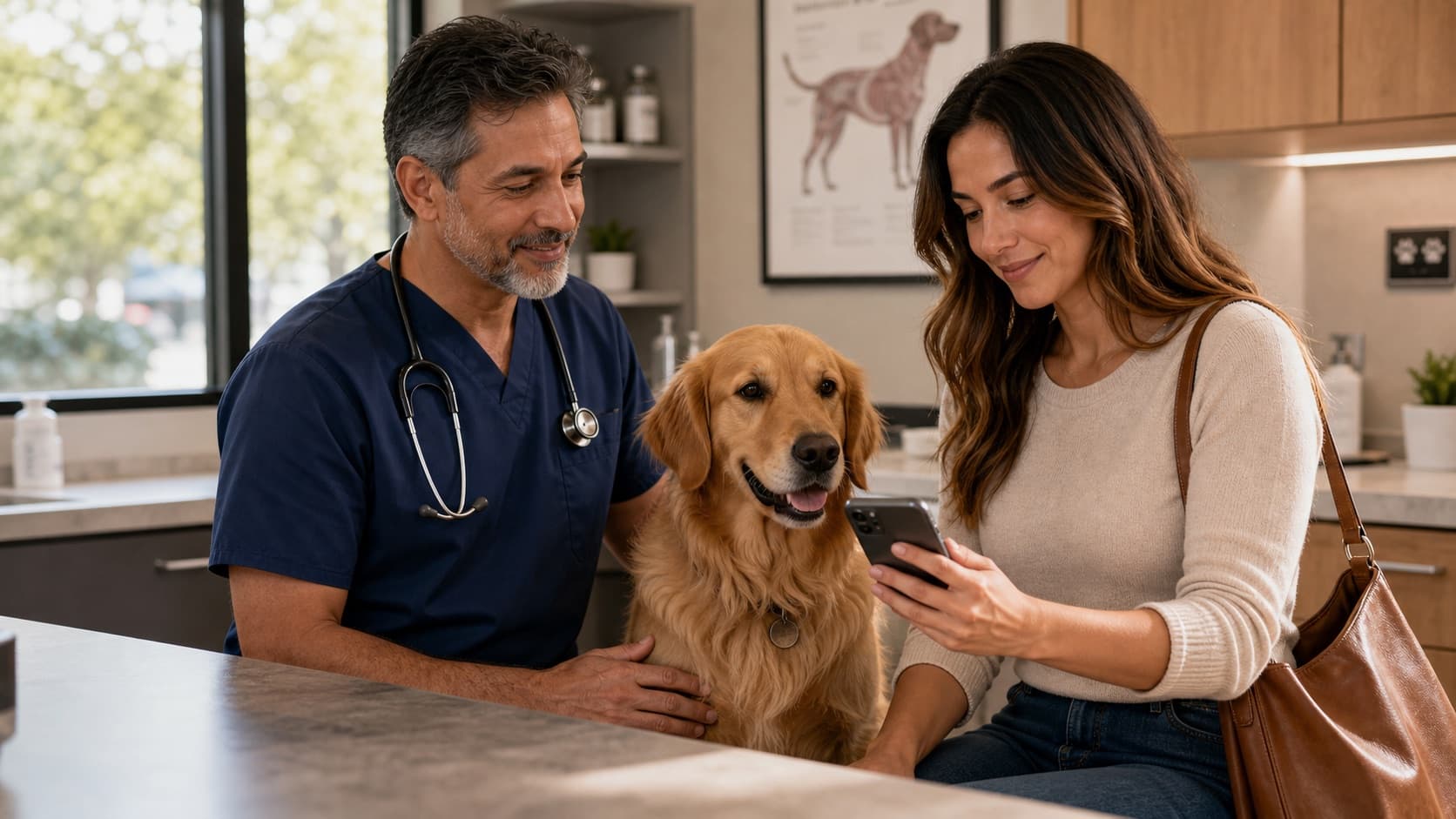
How Veterinary Clinics Get More Google Reviews (Even With Grieving Clients in the Mix)
Almost every vet practice owner says some version of the same thing. Their clients love them. They've been bringing their dogs in for twelve years, they cry in the lobby when the team does good work, they tell the staff at every visit how much they appreciate Dr. Sarah, and the practice has ninety-one Google reviews while the emergency clinic across town has four hundred. Then comes the hard part. They're not going to send a "how did we do?" text to the family that just put their fourteen-year-old lab to sleep an hour ago. So they don't send anything to anyone. That's the vet review problem in two sentences. The bond is unusually strong, the conversion rate when you ask the right client at the right time is the highest in almost any local-services category, and there's an unavoidable cohort you cannot ask, ever, where the consequence of getting it wrong is severe.
Here's the playbook I've seen general-practice vets, exotics clinics, and emergency hospitals use to go from a handful of reviews a year to three or four a week, without a tech ever performing the ask out loud, without a single grieving client receiving a "how was your visit?" text, and without the staff burnout from trying to remember who got bad news today. It's specific to how a vet hospital actually runs (wellness vs sick vs euthanasia, the bonded-client phenomenon, the vet-tech-as-bottleneck) because the generic "automate post-visit review requests" advice produces a disaster the first time it texts a grieving family.
Why Veterinary Reviews Are Both Easier and Harder Than You Think
By almost every signal you could measure, veterinary clinics should dominate Google reviews in their service area. The bond between client and vet is unlike any other relationship in local services. A client who's brought her cat to the same vet for eight years isn't a customer, she's family-adjacent. Conversion on a well-timed review request from a bonded client is the highest I see in any vertical.
And yet the typical independent vet practice runs years behind the corporate chains on Google. The reason isn't service quality. It's that there's a real, daily-occurring cohort of visits that absolutely cannot receive a post-visit request, and most owners (correctly, ethically) sense this and respond by simply not running an automated program at all. The risk of texting a grieving client is so much worse than the upside that most practices pick the safe option, which is to ask nobody.
The owners who break out of the ninety-review trap stop treating "ask everyone" and "ask nobody" as the only two options and build a system that knows which visits to ask after and which to suppress. That's the whole game. The differentiator isn't the cleverness of the message. It's the cleverness of the suppression list.
The Bonded-Client Advantage
It's worth spending a minute on why vet review conversion is so high when the ask lands correctly, because it shapes everything else in the playbook.
The bonded vet client is unusual in three specific ways. The relationship is long, measured in years and across multiple animals. The emotional content of the visits is high; even a routine wellness appointment for a senior dog carries the implicit weight of "how much time does he have left." And she's already talking about your practice to other pet owners in her circle, because pet conversations come up almost every day. She's already advocating for you. She's just never been asked to put it in writing.
When the post-visit text arrives short, warm, mentioning the pet by name, sent at the right delay, conversion from bonded clients sits roughly two to three times the rate I see in other categories. It's not unusual for 40-50% of sent requests to become a published review for the wellness cohort at an established practice. The reviews are long, specific, and emotional, the kind of three-paragraph reviews that read as deeply credible to prospective clients. They mention the vet, the tech, and the front desk by name, in client language Google indexes and ranks.
The implication is that you don't need huge volume. You need to ask the askable cohort, every week, for a year, and let the compounding do the work.
The One Cohort You Must Suppress
The visit you must never auto-text is the euthanasia appointment. That's obvious, and at most clinics it's understood. The harder version of the rule is that the suppression list is much broader than just euthanasia.
You can't auto-text the client whose pet received a terminal diagnosis, even if the pet went home alive. You can't auto-text the client whose pet had a bad surgical outcome, whether that's a complication, a longer stay than expected, or a transfer to the emergency hospital. You shouldn't auto-text the client whose sick visit ended with "let's run more tests," because she's now sitting at home, scared, waiting for a call, and a "thanks for your visit!" text in that window reads as oblivious and slightly cruel.
What these have in common is that "the visit happened and ended" isn't the same as "the visit ended well." Most automation platforms treat them as the same. They fire the request the moment the appointment is marked complete, with no concept of whether it was a wellness check that went perfectly or a sick visit that went sideways. That's the gap that produces the disaster: the grieving family that gets a chipper "how did we do?" text two hours after going home with an empty leash.
The fix is that the automation has to know, before it sends, what category the visit fell into. There's no other version of this that works.
How to Build "Don't Ask" Into the Automation
The mechanical piece is more straightforward than it looks, and it's what separates a working vet review program from one that gets shut down in week three after a complaint.
Practice management systems like Cornerstone, ezyVet, Avimark, and Provet all support visit-type tags. The automation reads those tags on appointment close and decides what to do. Wellness exam, vaccines, dental, nail trim, post-op recheck with positive outcome: send the post-visit text. Euthanasia, hospice consult, oncology consult, transfer-out, declined-treatment-poor-prognosis: never send anything, and ideally suppress every other marketing message to that client for the next ninety days.
The middle case, the sick visit with an uncertain outcome, is where the practice makes a deliberate choice, and it's best made by the staff who saw the visit. The cleanest pattern is a manual "release" step. The lead tech reviews the day's visits at end of day, marks the ones clear to ask, and the automation only sends to the released list. Five minutes a day, eliminating the single failure mode that breaks vet review programs.
Some practices push back on the manual step because it feels like it defeats the point of automation. The honest answer is that the automation is doing the other 95%: picking the delay, writing the message, mentioning the pet by name, capturing the response. The five-minute checkpoint is what makes the tool fit your vertical specifically. There's more architectural detail in our review-request automation guide.

Timing by Visit Type
Once the suppression list is built, timing is the next lever. Vet visits don't follow the same warm-window logic as salons because the emotional arc is different. The client doesn't walk out feeling transformed. She walks out reassured, and the reassurance peaks not at the door but four to twenty-four hours later, after the pet is home, eating dinner, acting normal.
The conversion peak for routine wellness sits between four and twenty-four hours post-visit. Four to six hours is the sweet spot for puppies and kittens (the client wants to talk about it); twelve to twenty-four for adult wellness checks.
Sick visits with positive outcomes (the dog with the limp that turned out to be a sprain, the cat on antibiotics and eating again) sit at forty-eight hours. The client needs to see the pet actually improving before she'll write a review about how well the visit went. At six hours she's still anxious. At forty-eight the antibiotics have kicked in.
Post-surgical rechecks with positive outcomes are usually the highest-conversion visits in the vet world, because the client is feeling acute relief. Twenty-four hours after the recheck is the right window. These reviews are the longest and most specific you'll ever get.
| Visit type | First send | Second send | Notes |
|---|---|---|---|
| Routine wellness (adult) | 12-24 hours | None | Highest-volume cohort, conversion strong |
| Puppy / kitten visit | 4-6 hours | None | Client is eager to talk about the new pet |
| Post-op recheck (positive) | 24 hours | None | Highest-conversion visit, longest reviews |
| Sick visit, positive outcome | 48 hours | None | Wait for the recovery to be visible |
| Sick visit, uncertain outcome | Hold | Manual release | Lead tech makes the call at end of day |
| Severe diagnosis | Never | Never | Suppress all messaging for 90 days |
| Euthanasia | Never | Never | Suppress all messaging permanently |
Vet-Named Reviews (and Why They Compound)
Google reviews attach to the business location, not the individual veterinarian. You can't tag a vet, but you can get the vet's name to appear inside the review text, where it's indexed by Google and read by prospective clients.
A text that says "thanks for bringing Bowie in today, we hope he's resting well" gets a generic review back. A text that says "thanks for bringing Bowie in to see Dr. Sarah today" produces reviews that mention Dr. Sarah by name about two-thirds of the time. Now Dr. Sarah has a discoverable presence on your Google profile. New clients searching for "vet near me with great bedside manner" land on your page, see five reviews describing how patient Dr. Sarah was with their anxious rescue, and book with her specifically.
This compounds more in vet than in almost any other vertical, because clients pick their vet, not just their hospital. A multi-doctor practice with reviews naming every doctor converts searches at a much higher rate than a same-quality practice with anonymous reviews. The associate vets start caring about the program. They mention at discharge: "you might get a text from us tomorrow, and if Dr. Sarah's name comes to mind, that helps us out." That soft pre-warm, paired with the automated send, is the highest-converting combination in the vertical.
The same logic applies to mentioning the pet's name. It makes the message feel personal, and reviews that mention pets by name read as more authentic. About two-thirds of every review on a healthy vet profile will include a pet's name. That's the tell that the practice is real.
The Annual-Wellness Velocity Problem
Here's the structural problem that quietly limits review velocity at every general-practice vet hospital, and it's the one most owners don't see until somebody points it out.
The core wellness customer comes in once a year. The math of "ask every wellness client at every visit" gives a one-thousand-active-pet practice roughly a thousand opportunities a year. The same math at a salon, where clients come in every six to eight weeks, produces five to seven times as many for the same active-client count. Vets have a velocity disadvantage built into the recurring-visit model.
The fix isn't to ask the wellness client more often than once a year. The fix is to widen the askable surface to include every other ethical opportunity the practice has: sick visits with positive outcomes, post-op rechecks, new-patient first visits, boarding pickups, grooming pickups. Each is a separate flow with its own delay and suppression rules, and adding them is what closes the velocity gap with higher-frequency verticals.
The other half of the fix is the annual reminder itself. Most practices send a reminder three weeks before the next wellness visit. That reminder is a natural place to include a single soft line for bonded clients who haven't reviewed in twelve months: "if you haven't had a chance to leave us a review since Bowie's last visit, we'd love to hear from you."
Handling the Reviews That Come Back Wrong
It would be dishonest to write a vet review playbook without acknowledging the negative-review pattern specific to this vertical. Vet practices get a kind of one-star review that doesn't show up elsewhere in local services: the grieving client who lost a pet and writes a public review blaming the practice, sometimes months later. These reviews are factually unfair more often than not, and they're among the hardest to respond to publicly, because the practice can't disclose clinical details due to confidentiality even when the public review is making clinical claims.
The right response is short, compassionate, and explicit about why the practice can't say more. Something like: "We are so deeply sorry for your loss. Out of respect for client confidentiality we can't discuss the specifics of Bowie's care publicly, but our team is here if you'd like to talk through what happened. Please reach out to the practice directly." Read by the next prospective client comparing vet hospitals, that signals professionalism, restraint, and human warmth. It does more for your conversion than the one-star did to hurt it. We unpack this pattern in our post on responding to negative Google reviews, and the parallel for confidentiality-constrained practices in our dental practice review post.
Frequently Asked Questions
Frequently Asked Questions
- Should a veterinary clinic ever automate review requests to euthanasia clients?
- No. Euthanasia visits should be suppressed permanently, along with all other marketing messaging for at least 90 days. There is no automation safe enough to handle this cohort.
- When is the best time to send a vet review request text?
- Twelve to 24 hours after a routine wellness visit, four to six hours after puppy and kitten visits, and 48 hours after sick visits with positive outcomes. Each visit type has a different emotional arc.
- How should the automation know which visits to skip?
- Practice management systems like Cornerstone, ezyVet, and Avimark all support visit-type tags. Wire the automation to read those tags and add a five-minute end-of-day human checkpoint for sick visits with uncertain outcomes.
- Does mentioning the vet's name in the request actually help reviews?
- Yes. About two-thirds of resulting reviews mention the vet by name when the request includes it. That language is indexed by Google and drives bookings for the specific provider.
- How should a vet respond to a grief-driven one-star review months after a pet's death?
- Briefly, with empathy, and explicitly invoking client confidentiality as the reason the practice cannot discuss specifics publicly. Prospects read the response more than the review itself.
- Why are vet clinics behind chains and emergency hospitals on Google review count?
- Annual wellness cadence limits volume, and most independent clinics never wire the suppression logic that would let them safely automate. Both problems are operational, not service quality.
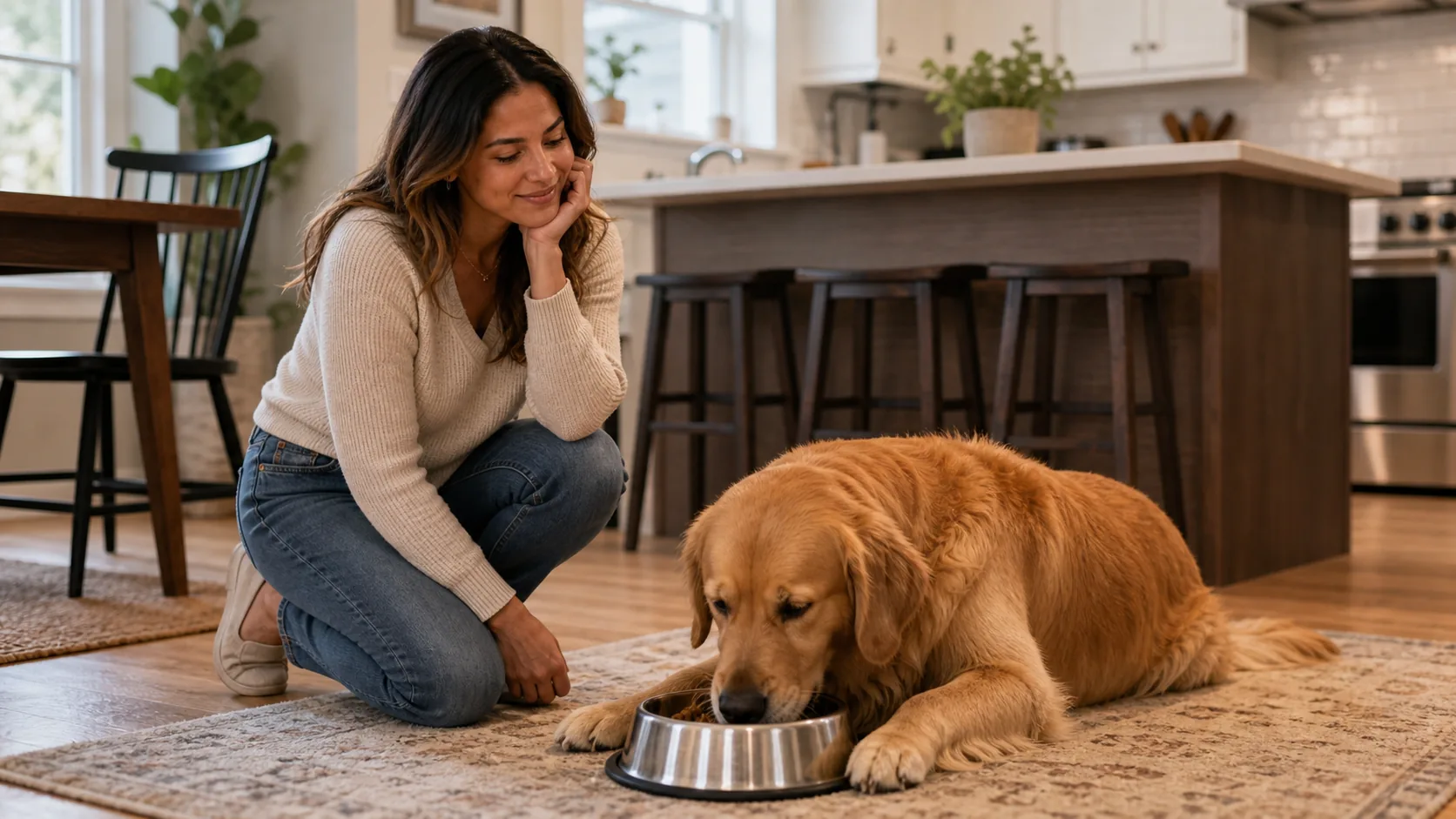
None of this requires the vets or the techs to do anything they don't already do. Clients still book, the practice still treats, the front desk still discharges. What changes is that the review request gets sent to the cohort that should be asked, at the timing window that fits the visit type, with a five-minute end-of-day human checkpoint that catches the visits the automation shouldn't touch. If you want the suppression logic, the visit-type delays, and the vet-named templates running by end of week, that's the entire reason ThankYouReview exists. Otherwise, pick your wellness cohort, write one warm text that mentions the pet and the vet by name, ship it on Monday, and have the lead tech spend five minutes at end of day deciding which visits to release. Vet reviews don't come from the reception desk. They come from the kitchen floor where the dog is finally eating again.
Keep reading

How Hair Salons Get More 5-Star Google Reviews (Without Asking Awkwardly)
A salon-specific playbook for getting more Google reviews from chair-side conversations and a tiny bit of automation.

How Dental Practices Get More Google Reviews (HIPAA-Safe Playbook)
A HIPAA-aware approach to review requests for dental practices — what you can and can't say in an SMS, and the wording that converts.

How Med Spas Get More Google Reviews (Without Crossing FDA or HIPAA Lines)
A med-spa playbook for collecting more reviews while staying clear of FDA marketing rules, HIPAA constraints, and review-platform red flags.